Vintage Survive: The Bold Grunge Display Font for Resilient Digital Brands
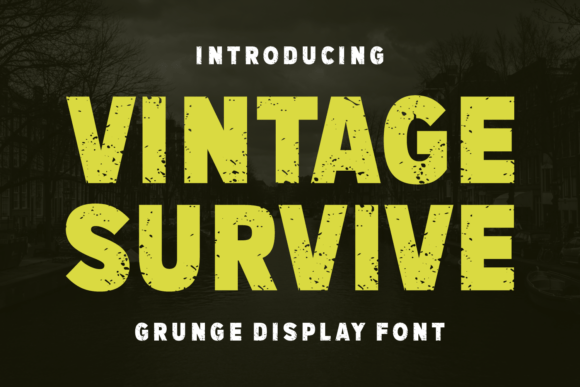
I was staring at a blank hero section on a new landing page, trying to balance grit with professionalism. The client wanted an aesthetic that felt aged and distressed but still conveyed resilience—a visual metaphor for a brand that has weathered storms and come out stronger. Standard sans-serif fonts felt too sterile, and traditional serif fonts lacked the punch we needed. That’s when I pulled Vintage Survive into my design software. It immediately changed the tone of the entire layout. This isn’t just another decorative typeface; it is an impactful, ultra-bold Grunge Display Font designed to convey an aged, distressed, and resilient aesthetic. Its heavy, blocky structure is entirely filled with intentional texture, making it a perfect candidate for digital projects that need to stand out in a crowded feed or browser window.
Vintage Survive Hero Section Typography for High-Impact Landing Pages
When designing a high-converting landing page, the headline is the first thing a user scans. Using Vintage Survive for your main headline can instantly grab attention because its visual weight demands it. In my recent project for a boutique outdoor gear retailer, we placed this font over a dark, textured background image of rugged terrain. The contrast between the clean edges of the surrounding interface and the distressed nature of the display font created a compelling focal point. Because the letters are so bold, they hold their shape even when overlaid on complex imagery, provided you use sufficient contrast. For web designers looking to add character without sacrificing clarity, this font serves as a powerful tool for establishing immediate brand authority. It works exceptionally well for campaign pages where the message needs to be loud, urgent, and memorable.
Vintage Survive for Boutique Online Store Brand Identity
A cohesive brand identity relies heavily on consistent typography across all touchpoints. Integrating Vintage Survive into a digital brand kit allows online store owners to inject personality into their product categories and sale banners. I tested this font for category headers in a mock-up for a vintage clothing e-commerce site. The grunge texture complemented the "pre-loved" narrative perfectly, reinforcing the idea of durability and history. However, using such a heavy display font requires strategic restraint. I found that limiting its use to large-scale elements like banner headlines and promotional badges kept the shopping experience from feeling cluttered. When paired with a clean, neutral sans-serif font for product descriptions and navigation menus, the overall user experience remained polished and easy to navigate. This balance ensures that while the brand feels edgy, the checkout process remains frictionless.
Vintage Survive Course Sales Page Headlines and Call-to-Action Areas
For course creators and digital product sellers, trust and engagement are paramount. A sales page needs to guide the reader’s eye toward conversion points without overwhelming them. I experimented with Vintage Survive for section dividers and subheadings on a coaching website template. The font’s resilient aesthetic subtly communicates strength and reliability, which aligns well with personal development branding. We used it sparingly, perhaps once per major section, to break up long blocks of text. The key here is readability; because the font is dense with texture, it should not be used for body copy. Instead, let it serve as a visual anchor. When placed above a simple, high-contrast call-to-action button, the hierarchy becomes clear: the bold header grabs interest, and the clean button invites action. This approach helps maintain a professional tone while still leveraging the unique character of the typeface.
Vintage Survive Portfolio Sites and Creative Agency Web Design
Creative professionals often struggle to find a font that reflects their artistic style without compromising modern web standards. Vintage Survive offers a solution for portfolios in industries like photography, tattoo art, or urban planning, where a raw, authentic look is preferred. In a portfolio homepage redesign, I used the font for the designer’s name and major project titles. The blocky structure provides a solid foundation for a grid-based layout, allowing images to shine without competing with overly delicate typography. It is crucial to test how the font renders on different devices. On mobile screens, the heavy weight can sometimes feel cramped if the line height is too tight. By increasing the letter spacing slightly and ensuring ample white space around the text, the font breathes better and remains legible on smaller displays. This attention to detail elevates the perceived quality of the creative work itself.
Vintage Survive Blog Graphics and Social Media Content Creation
Beyond the website itself, consistent typography extends to social media graphics and blog headers. Vintage Survive translates well to static images due to its strong silhouette. I created a series of quote graphics for a lifestyle blog, using the font for the main statement against a muted, grainy background. The intentional texture of the letters added depth to the flat design, making the posts more engaging in a fast-scrolling newsfeed. When creating these assets, it is important to consider file formats and resolution. Since the font includes detailed distressing, exporting as a high-resolution PNG or SVG ensures that the textures remain crisp. For video content or animated headers, the bold nature of the font ensures that text remains readable even with motion effects applied. This versatility makes it a valuable asset for marketers who need to produce varied content types quickly.
Vintage Survive Font Pairing Strategies for Modern Web Layouts
Selecting the right companion font is critical when working with a dominant display font like Vintage Survive. The general rule of thumb is to pair a complex, decorative typeface with a simple, highly readable one. For body text, I recommend a geometric sans-serif or a humanist sans-serif font. These choices provide a neutral backdrop that allows the grunge characteristics of the display font to take center stage. Avoid pairing it with other serif fonts or script fonts, as this can create visual chaos and reduce accessibility. The goal is to create a clear visual hierarchy where the viewer knows exactly what to read first. By keeping the supporting typography minimal and clean, you ensure that the website loads quickly and performs well across all browsers. This strategy not only improves aesthetics but also supports SEO by keeping content accessible to screen readers and search engine crawlers alike.
Vintage Survive Commercial Licensing and Technical Implementation Details
Before integrating Vintage Survive into any client project or commercial product, it is essential to review the licensing terms. As a premium display font, understanding the scope of use—whether for web, print, or app embedding—is vital for legal compliance. Check the included file formats to ensure compatibility with your workflow, such as OTF, TTF, or WOFF2 for web optimization. Some packages may include alternate characters or ligatures that can enhance specific words or names. Testing the font in a staging environment before going live helps identify any rendering issues, particularly with the textured details on older browsers. Proper implementation involves minifying the font files to improve page load speeds, which directly impacts user retention. By treating the font as a core component of your technical stack, you ensure that the visual impact of the design is matched by performance excellence.