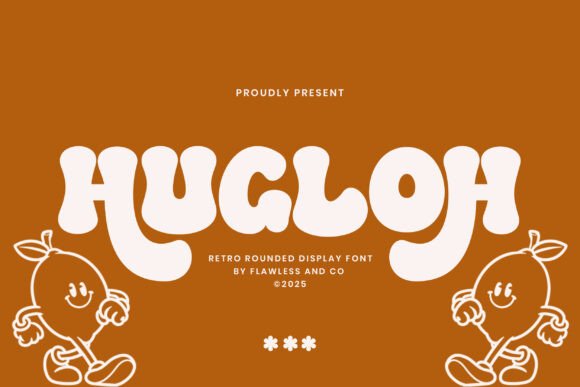
Hugloh: The Retro Rounded Display Font for Warm Brand Identity
I opened a blank brand board this morning with the intention of creating something fresh for a local bakery client. After sketching several logo concepts, I found myself stuck on the typography. The script options felt too fussy, and the standard sans-serifs looked too cold for a shop selling handmade pastries. That was when I decided to test Hugloh, a retro rounded display font that brings warmth, charm, and playful personality into every design. As soon as I typed "Sweet Crumb" in the font, the entire mood of the project shifted. The rounded letterforms create a friendly and inviting feel, making it perfect for designs that need to connect emotionally with their audience.
This isn't just another decorative typeface; it is a strategic tool for brand identity. Throughout my testing process, which included mockups for packaging, social media graphics, and website headers, Hugloh proved itself as a versatile asset for any creative professional looking to add character without sacrificing legibility. Whether you are a freelance designer building a portfolio or an entrepreneur launching a new product line, understanding how to leverage this specific font style can elevate your visual communication significantly.
Hugloh for Bakery Packaging and Product Label Design
When evaluating Hugloh for physical products, its performance as a Display font becomes immediately apparent. I applied the typeface to a series of mockups for organic skincare jars and artisanal cookie boxes. The thick, rounded strokes hold up incredibly well at large sizes, ensuring that the brand name remains the focal point even from a distance. Unlike many other retro fonts that lose detail when scaled down, the geometric yet soft structure of these Fonts maintains clarity on small labels.
The warm aesthetic of Hugloh suggests quality and care, which is essential for consumer goods. On a packaging mockup, the font made the product look approachable and trustworthy. It avoids the harsh edges of modernist sans-serifs while retaining enough structure to remain readable. For designers working on food and beverage branding, this typeface offers a distinct advantage: it signals homemade authenticity without appearing messy. It works particularly well when paired with earthy colors and textured backgrounds, creating a cohesive look that feels both nostalgic and contemporary.
Hugloh for Creative Studio Logos and Business Cards
In the realm of corporate identity, Hugloh serves as a powerful statement piece for studios that want to stand out. I tested the font on a business card layout for a digital marketing agency that wanted to shed its stiff image. The result was striking; the rounded forms softened the professional tone, making the company appear more collaborative and human-centric. When used as a primary logo element, the font creates a memorable silhouette that is easy to recognize.
However, using a display font like Hugloh requires a strategic approach. It is best utilized as a headline or logo font rather than for body text. In my review of the file set, I noted that while the main characters are robust, the fine details might not render perfectly in very small print sizes. Therefore, for business cards, it should be reserved for the company name, perhaps paired with a clean, simple sans-serif for contact details. This combination ensures that the brand retains its unique personality while maintaining necessary professionalism and readability.
Hugloh for Social Media Graphics and Website Headers
Digital platforms demand immediate engagement, and Hugloh delivers exactly that. I created a series of Instagram posts and Facebook cover images using the font to promote a workshop event. The playful personality of the typeface naturally drew the eye, stopping users from scrolling past. Because the letterforms are open and rounded, they translate beautifully on screens of all resolutions, from mobile devices to desktop monitors.
For web design, Hugloh excels in hero sections and navigation menus where impact is key. When placed over a bold background image, the contrast between the white (or colored) text and the scene creates a dynamic visual hierarchy. It acts as a bridge between the viewer and the content, setting a welcoming tone before the user even reads the first paragraph of copy. While it is not suitable for long-form editorial design or blog body text due to its display nature, it is an excellent choice for call-to-action buttons, section titles, and promotional banners.
Hugloh for Wedding Invitations and Boutique Branding
The charm inherent in Hugloh makes it a standout choice for events and lifestyle brands. I explored its potential for wedding stationery, pairing it with delicate floral illustrations. The rounded edges complemented the organic shapes of the flowers, creating a unified and romantic aesthetic. Unlike traditional script fonts that can be difficult to read, Hugloh offers a level of accessibility that ensures guests can easily read dates and locations without squinting.
Beyond weddings, this font shines in boutique branding for shops selling handmade crafts, vintage clothing, or home decor. The retro vibe evokes a sense of nostalgia and craftsmanship, which aligns perfectly with the values of small businesses. By integrating Hugloh into a brand system, owners can establish a consistent voice across their website, email newsletters, and physical storefront signage. The font's ability to convey warmth helps build a community around the brand, encouraging customer loyalty and repeat visits.
Practical Considerations and Font Pairing Strategies
While Hugloh is a compelling addition to any design toolkit, it is important to understand its limitations. It is strictly a display typeface and should not be used for paragraphs of text or technical documentation. The rounded forms, while charming, lack the sharp serifs or clean lines needed for high-volume reading. For optimal results, pair Hugloh with a neutral sans-serif or a classic serif font. A clean geometric sans-serif can balance the playfulness of Hugloh in layouts requiring both headings and body copy, while a serif font can add a touch of elegance for formal invitations or luxury packaging.
Before committing to a final design, always test the font in various contexts. Check how it looks on dark versus light backgrounds, and ensure the kerning remains balanced when letters are grouped together. Most importantly, verify the licensing terms. If you plan to use Hugloh in client work, merchandise, or commercial templates, ensure you have the appropriate rights to avoid legal issues. With the right application, Hugloh transforms from a simple typeface into a vital component of a successful brand identity, proving that a little warmth goes a long way in design.