Time Work: A Soft Display Font for Modern Brand Identity
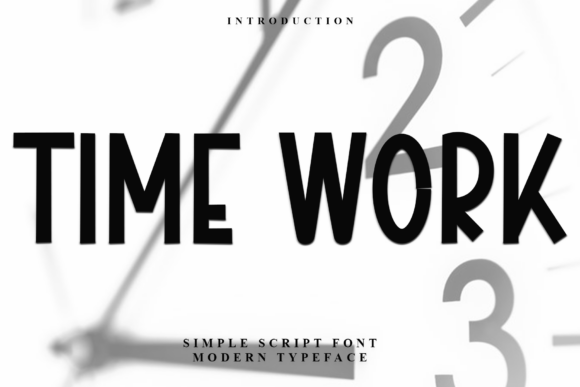
I remember staring at a blank brand board late on a Tuesday, the cursor blinking in the center of an empty canvas. The client was a small-batch skincare line that needed to feel organic yet sophisticated, and every standard serif or sans-serif option felt too rigid for their story. That was when I pulled Time Work from my library. It is a beautiful and eye-catching font designed with a soft, unique touch, and within minutes, it transformed the sterile layout into something warm and inviting. Its distinctive strokes give it a special character, making meaningful connections between the product and the viewer almost instantly.
As a designer who has tested countless typefaces across various projects, I rarely find a display font that balances personality with versatility this seamlessly. When I placed Time Work on a mockup of a glass jar label, the soft curves seemed to echo the natural ingredients inside. Unlike many decorative fonts that scream for attention but lack subtlety, this typeface whispers elegance while still commanding space. It is exactly the kind of creative font that elevates a brand identity without overwhelming the core message.
Time Work for Boutique Packaging and Product Labels
Time Work shines brightest when applied to physical products where tactile appeal matters as much as visual impact. During a recent project for a local artisanal bakery, I tested the font on several packaging mockups, ranging from kraft paper bags to elegant box lids. The way the letters interacted with different textures was remarkable; the distinctive strokes added a layer of handcrafted charm that digital printing often struggles to replicate.
For businesses looking to stand out on crowded shelves, using Time Work as a primary logo font or a headline element can create immediate recognition. The soft, unique touch ensures that even small text remains legible while maintaining a premium feel. Whether you are designing tea boxes, candle jars, or cosmetic bottles, this display font offers the perfect balance of modern typography and nostalgic warmth. It avoids the generic look of stock designs, giving your product a bespoke quality that customers trust.
Why Time Work Fits Handmade Shop Branding
- The soft curves mimic the imperfections of handmade goods, creating an authentic connection.
- Versatile enough to work alongside simple icons or complex illustrations.
- High contrast in its letterforms makes it readable even at smaller sizes on tags.
Time Work for Social Media Graphics and Digital Headers
Transitioning from print to screen, I found that Time Work maintains its integrity across digital platforms. In an era where social media feeds are cluttered with bold, aggressive typography, this font offers a refreshing alternative. I used it for a series of Instagram posts for a creative studio, placing it over minimalist photography backgrounds. The result was a cohesive feed that felt curated rather than chaotic.
When designing website headers or blog post titles, the distinct character of these fonts helps break up walls of text and guides the reader's eye naturally. It works exceptionally well for short phrases, headlines, and call-to-action buttons where you need to inject emotion without sacrificing clarity. The soft, unique touch prevents the design from feeling cold or corporate, which is crucial for lifestyle brands, wellness coaches, and boutique e-commerce stores aiming for a personal touch.
Optimizing Time Work for Web Design Assets
- Use it as a hero headline to set the mood before the user scrolls.
- Pair it with a clean sans-serif font for body text to ensure readability.
- Leverage its vertical rhythm to create dynamic layouts for landing pages.
Time Work for Wedding Invitations and Elegant Branding
One of the most surprising applications I discovered for Time Work was in the realm of event branding. While many designers default to script fonts for weddings, those can sometimes be hard to read or feel overused. Time Work offered a middle ground—it has the grace of a script but the structural stability of a display font. I tested it on a wedding invitation suite, combining it with watercolor floral elements, and the soft, unique touch complemented the artistic style perfectly.
Its distinctive strokes give it a special character that feels timeless rather than trendy. This makes it ideal for luxury brands, high-end boutiques, or any business wanting to convey sophistication. For example, I used it on a business card for a jewelry maker, and the subtle variations in the letterforms caught the light beautifully under a UV spot gloss finish. It proves that this isn't just a font for casual use; it is a serious tool for professional branding that requires a touch of class.
Best Practices for Formal Applications
- Ensure sufficient white space around the text to let the unique strokes breathe.
- Avoid using all caps for long titles, as the lowercase forms carry more personality.
- Test the font on dark backgrounds to confirm the soft edges remain crisp.
Time Work for Editorial Design and Creative Typography Systems
Beyond logos and packaging, Time Work proved useful in editorial contexts where visual hierarchy is key. When working on a magazine spread for a lifestyle publication, I used it for pull quotes and section headers. The font's ability to draw attention without shouting made it perfect for breaking up dense articles. It adds a layer of stylistic flair that keeps readers engaged, proving that versatile for future use is not just a marketing claim but a functional reality.
However, like any display font, it has limitations. It is not suitable for long-form body text, legal documents, or technical manuals where absolute neutrality is required. The soft, unique touch is meant to be experienced in bursts—headlines, captions, and short slogans. If you are building a comprehensive brand system, consider pairing Time Work with a neutral sans-serif or a classic serif to handle the heavy lifting of information delivery. This combination creates a modern typography system that feels both approachable and authoritative.
Font Pairing Recommendations
To get the most out of Time Work, try pairing it with a geometric sans-serif for a contemporary look or a traditional serif for a classic aesthetic. Avoid pairing it with other highly decorative fonts, as the distinctive strokes might compete for attention. Instead, let Time Work be the star of the show, supported by simpler typefaces that enhance rather than distract.
Final Considerations for Commercial Use
Before integrating Time Work into your final client deliverables, always review the included styles, alternates, and ligatures. Testing the font in various weights and sizes will help you understand its full potential. Remember to check the commercial font licensing terms carefully, especially if you plan to use it in merchandise, templates, or print-on-demand products. Ensuring you have the correct license protects your business and respects the creator's work.
Ultimately, Time Work is more than just a collection of glyphs; it is a design asset that brings a specific mood to your projects. Whether you are refreshing a café visual identity, launching a new skincare line, or designing a creative studio portfolio, this font offers the soft, unique touch needed to make your brand memorable. Its distinctive strokes give it a special character, making it a valuable addition to any designer's toolkit for future use.